
ISO 27001 Certification in the United Kingdom: A complete Guide for Individuals and Enterprises
ISO 27001 certification in the United Kingdom is non-negotiable for GDPR compliance and supply chain credibility. Learn how both individual security professionals and organizations can achieve ISO 27001 certification UK with Lead Auditor and Lead Implementer training from reconn.

Introduction
Two things are happening in the UK right now.
For individual security professionals: You're watching the market shift. Organizations mandate ISO 27001 certification for anyone overseeing information security. Lead Auditor or Lead Implementer roles are opening up. Salaries are climbing. Consulting work is plentiful. But the certification process feels opaque. How long? What do you actually need to know? Where do you start?
For organizations: You're under pressure from multiple directions. GDPR fines loom (20 million euros or 4% of global revenue). Your FCA regulator expects robust controls. Major customers demand ISO 27001 certification before they'll sign. Your board asks when you'll be certified. The clock ticks.
ISO 27001 certification is the answer for both. It's the internationally recognized standard for Information Security Management Systems. When you achieve it, you prove to regulators, customers, and boards that you take information security seriously.
This guide walks you through both paths. What the process looks like in practice. How long it takes. What training you need. And what you'll find across ten UK cities where security professionals and organizations are getting certified right now.
ISO 27001 CERTIFICATION PATHWAYS
Whether you're building your ISO 27001 career or certifying your organization, partner with someone who's done both successfully.
With 20+ years of hands-on security experience, I've led both Lead Auditor and Lead Implementer training across Europe, the Middle East, and Asia-Pacific. Whether you need to launch your certification career or guide your organization through ISO 27001 implementation, we'll get you there with proven frameworks and real-world insights—not generic templates.
Individuals: Fast-track to Lead Auditor or Lead Implementer certification with self-study ($799) or eLearning ($899). Organizations: Custom implementation consulting + training, tailored to your risk profile and regulatory obligations (GDPR, FCA, NCSC). Service available online, UK-based, and globally.
reconn.io | Dubai, UAE | Remote delivery worldwide
Key Takeaways
- ISO 27001 certification in the United Kingdom is de facto mandatory: GDPR requires it, FCA-regulated firms pursue it, and major customers demand ISO 27001 certification in contracts
- For individuals: Lead Auditor and Lead Implementer certifications take 40 hours of training plus a 180-minute exam (open-book, 80 questions). You can achieve ISO 27001 certification in 2–8 weeks
- For organizations: Most take 7–10 months from starting the project to getting the certificate. Typical cost is 15,000 to 40,000 pounds depending on organization size
- The standard includes 93 security controls. You'll select 60–90 based on your specific security risks
- Ten UK cities are certification hubs where individual auditors and implementing professionals are actively achieving ISO 27001 certification
Two Paths to ISO 27001 Certification
Path 1: Personal Certification (Individual Professional) – Getting ISO 27001 Certified
You're a security professional. The market is moving toward ISO 27001 as a baseline credential. Getting ISO 27001 certification is becoming a baseline expectation. CISOs are being asked for it. Security managers need it. Internal auditor training courses increasingly expect it.
Why individuals get certified:
- Career advancement. CISOs and security managers with ISO 27001 move into higher-paying roles faster than peers
- Consulting income. Independent auditors typically charge 100–200 pounds per hour. Implementers charge 80–150 pounds per hour
- Competitive advantage. In interviews, ISO 27001 signals you understand the practical side of building compliant systems, not just theory
- Salary premium. Certified professionals in security earn 15–25% more
- Portable credential. It works in every country. You take it with you if you relocate or change organizations
Timeline for you: 40 hours of training plus a 180-minute exam. You can achieve ISO 27001 certification in 2–8 weeks depending on whether you choose self-study (slower) or live training (faster).
Cost: Either $799 USD for self-study or $899 USD for eLearning. Both include materials, two exam attempts, and one year of maintenance to keep your certification valid and aligned with iso standards.
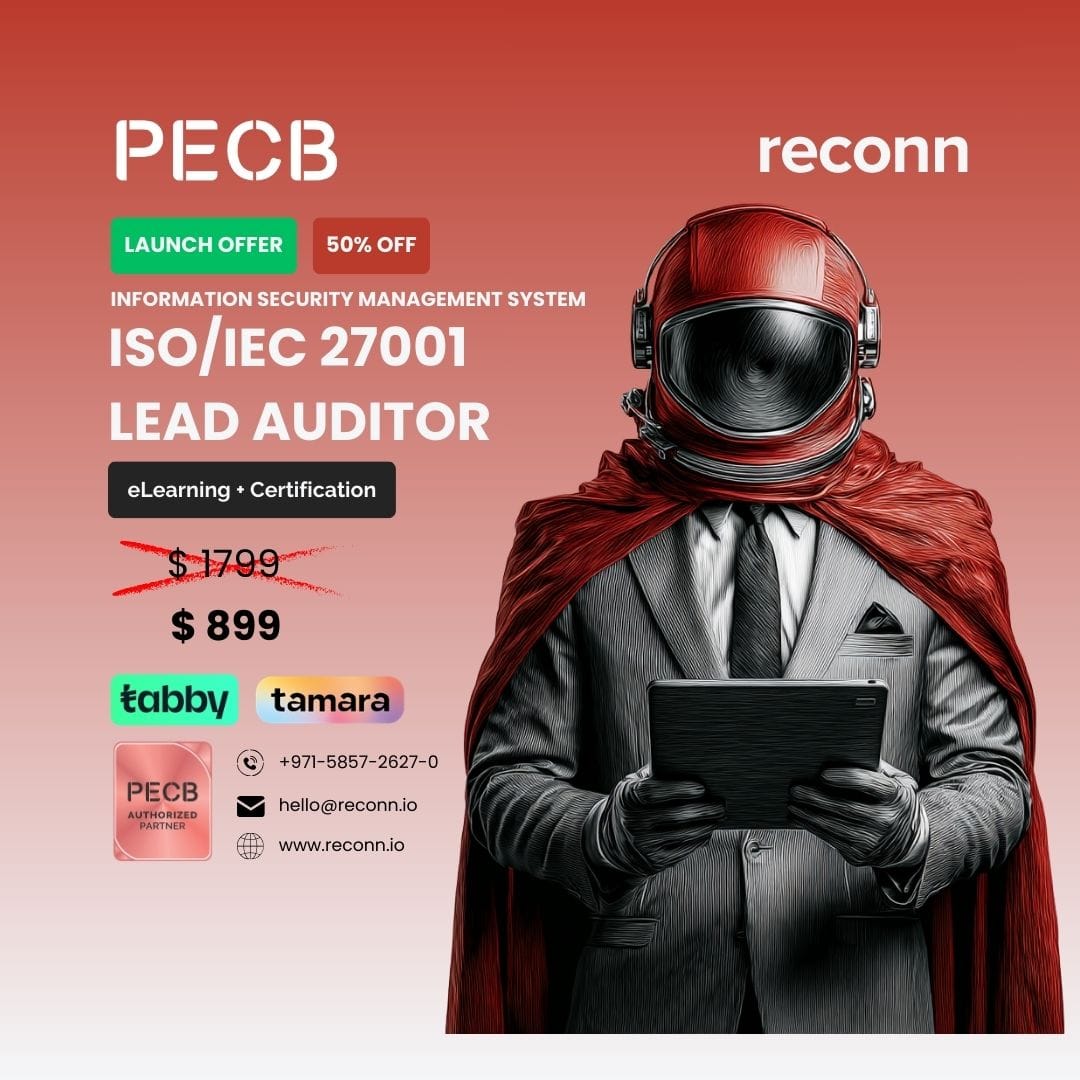
PECB ISO 27001 Lead Auditor Certification
Plan, manage, and lead ISO 27001 ISMS audits with confidence. Self-study from $799 or eLearning from $899 — both include 2 exam attempts and official PECB courseware. Covers internal and external audits based on ISO 19011 and ISO 17021.
Path 2: Enterprise Certification (Organization Building ISMS with Certification Body Support)
You're running information security for an organization. Your CEO is asking about ISO 27001. Your board wants to understand the compliance picture. Your customers are demanding ISO 27001 certification. Your FCA regulator expects it, and you need to demonstrate your organisation's commitment to information security.
Why organizations get certified:
- GDPR compliance. The regulation requires technical and organizational measures to protect data. ISO 27001 certification proves you've met those requirements
- FCA requirement. Financial services, insurance, and fintech firms pursue it to satisfy senior management accountability requirements
- Supply chain mandate. Major customers include ISO 27001 certification in vendor contracts. Without it, you can't bid on their work
- Board accountability. A certified ISMS protects leadership from liability. It's evidence the organization took security seriously
- Competitive win. Certified organizations are trusted more by partners
- Risk reduction. Cyber insurance premiums often drop post-certification
Timeline for you: 7–10 months from the day you start the project to the day you achieve ISO 27001 certification. That includes scope definition, security risks assessment, control selection, implementation, readiness audit, and the final certification audit where you'll be issued a certificate.
Cost: Custom implementation pricing (depends on organization size, complexity, and current security maturity) plus auditor fees. For most mid-market organisations of all sizes, expect 15,000 to 40,000 pounds total. Larger organizations or those starting from zero may spend more.
PECB ISO 27001 Lead Auditor Certification
Plan, manage, and lead ISO 27001 ISMS audits with confidence. Self-study from $799 or eLearning from $899 — both include 2 exam attempts and official PECB courseware. Covers internal and external audits based on ISO 19011 and ISO 17021.
Why Organizations in the United Kingdom Need ISO 27001 Certification
GDPR Compliance and Article 32 Requirements
The General Data Protection Regulation (GDPR) sets the legal floor. If your organization processes personal data of UK or EU residents, GDPR requires you to implement technical and organizational measures. Article 32 specifically calls for encryption, access control, incident response procedures, and regular testing of security measures.
The Information Commissioner's Office (ICO), which enforces GDPR in the UK, expects organizations to reference ISO 27001 in Data Protection Impact Assessments. When you achieve ISO 27001 certification and demonstrate compliance with ISO 27001, you have auditor-verified evidence that you've managed information security and met Article 32 requirements.
This matters because GDPR fines are serious. Organizations face up to 20 million euros or 4% of global annual revenue. More importantly, regulators use ISO 27001 certification as evidence that an organization has taken information security seriously. Without it, you're exposed.
FCA Regulation and Financial Services Compliance
The FCA's SYSC (Senior Management Accountability Regime) doesn't explicitly mandate ISO 27001. But it requires financial services firms to maintain robust governance and information security controls. Banks, insurers, fintech firms, and wealth managers all pursue ISO 27001 to satisfy this requirement.
FCA regulators expect third-party validation of information security controls. ISO 27001 certification, conducted by an accredited certification body, provides that. It signals to the FCA that senior management takes information security seriously.
For financial services organizations across London, Edinburgh, Manchester, and Belfast, achieving ISO 27001 certification is essentially non-negotiable. It's the standard language regulators speak.
Customer Supply Chain Requirements
Large enterprises include ISO 27001 certification in vendor contracts. If your customer is a FTSE 100 company, a multinational manufacturer, or a government agency, they expect you to be certified. Many make it a hard requirement.
This is supply chain risk management. Enterprises view certified vendors as lower risk. An accredited certification body has verified your controls.
For organizations trying to win business from larger enterprises or government, achieving ISO 27001 certification isn't optional. It's a requirement to compete.
NHS and Healthcare Sector Compliance
The NHS uses the Data Security and Protection Toolkit (DSPT) as its compliance framework. DSPT maps directly to ISO 27001 controls. NHS trusts and suppliers must meet DSPT standards. Many pursue ISO 27001 certification to demonstrate commitment and build confidence with the NHS.
Healthcare organizations handle sensitive data: patient records, clinical trial data, genetic information. The stakes are higher. ISO 27001 provides the framework to protect that data.
ISO 27001 Standard: Understanding the Framework
What is ISO 27001?
ISO 27001 specifies how to establish, implement, maintain, and improve an Information Security Management System (ISMS). It's not just technology. It's a management system requiring policy, governance, risk assessment, control implementation, training, incident response, and continuous improvement.
The core principle is the CIA triad: Confidentiality (keeping information private), Integrity (ensuring information isn't altered), Availability (making sure information is accessible when needed).
The 14 Control Objectives
ISO 27001 includes 93 controls organized under 14 control objectives:
- Governance and organization
- Asset management
- Human resources security
- Access control
- Cryptography
- Physical and environmental security
- Operations security
- Communications security
- System acquisition, development, and maintenance
- Supplier relationships
- Information security incident management
- Business continuity management
- Compliance (with legal and regulatory requirements)
- Internal audit and management review
Here's the practical part: You won't implement all 93. Based on your risk assessment, you select 60–90 that address your specific risks. A bank protecting customer financial data selects different controls than a marketing agency. The framework is flexible by design, and organizations of all sizes benefit from this flexibility.
How Controls Work Together
Controls work in layers. Access control limits who sees sensitive data. Encryption protects it if stolen. Incident response procedures kick in if something goes wrong. Business continuity plans ensure recovery. Physical security prevents someone from unplugging the servers.
That's what makes ISO 27001 powerful. It's not a checklist of isolated measures. Controls reinforce each other and support getting certification.
UK Regulatory Context: Internationally Recognized Standards and Compliance Requirements
GDPR and Data Protection Act 2018
GDPR applies to any organization processing personal data of UK or EU residents. The UK Data Protection Act 2018 implements it into UK law. Both require organizations to demonstrate compliance with data protection principles.
Article 32 explicitly requires appropriate technical and organizational measures. ISO 27001 certification is the gold standard demonstration. The ICO, which enforces GDPR, acknowledges ISO 27001 as evidence of compliant practices.
If you can show ISO 27001 certification, you're in a much stronger position if regulators ever inquire. It's not a legal requirement. It's practical protection that demonstrates your commitment to information security.
FCA Handbook and Financial Services Compliance
The FCA Handbook sets out requirements for authorized firms. SYSC (Senior Management Accountability Regime) requires senior management to maintain robust governance and control frameworks. While the handbook doesn't explicitly require ISO 27001, FCA-regulated firms pursue getting ISO 27001 certification because it satisfies the implicit requirement.
For banks, insurers, wealth managers, and fintech firms across the UK, achieving ISO 27001 certification is the standard way to demonstrate SYSC compliance. It shows the regulator that senior management has implemented industry-standard controls and maintains them through ongoing audits with an accredited certification body.
NCSC Guidelines and Critical Infrastructure
The National Cyber Security Centre (NCSC), part of GCHQ, publishes UK security standards and guidance. Organizations defending critical infrastructure (power, water, telecom, finance, healthcare) are expected to follow NCSC principles.
ISO 27001 controls align with NCSC guidance. Organizations can show NCSC compliance by achieving ISO 27001 certification. It's become the standard language for discussing information security in UK critical infrastructure sectors.
NHS and Public Sector Data Security
The NHS uses the Data Security and Protection Toolkit (DSPT), which maps controls to ISO 27001. NHS trusts must meet DSPT standards. Suppliers to NHS trusts must demonstrate DSPT compliance.
Many NHS organizations pursue ISO 27001 certification as the most straightforward way to demonstrate DSPT compliance. It also signals to the NHS that they're serious about safeguarding sensitive data and patient information.
How to Achieve ISO 27001 Certification UK Across 10 Cities
London: Financial Services and Certification Hub
London is the UK's financial capital. HSBC, Barclays, Lloyd's, Wise, Revolut—the list is long. The FCA is headquartered here.
For individuals: ISO 27001 certification opens doors in London. Lead Auditor roles at certification bodies (BSI, Bureau Veritas, SGS) are plentiful and well-paid. Lead Implementer roles at fintech startups building ISMS from scratch are in demand. Independent auditors charge premium rates: 100–200 pounds per hour.
For organizations: Your FCA regulator expects certification. Plan 6–9 months if you have existing security infrastructure. Smaller fintech firms starting from zero should budget 9–12 months. Typical cost: 20,000–50,000 pounds.
Manchester: Enterprise and Supply Chain Hub
Manchester is home to major enterprises: Unilever, Ocado, Pets at Home. It's a major logistics and manufacturing center where supply chain security is critical.
For individuals: Enterprise organizations here need ISO 27001 implementers who understand large-scale, multi-location deployments. Supply chain security specialists are particularly valuable.
For organizations: With 500+ employees across multiple locations? Plan 8–10 months. Customers will demand certification within 12–18 months. Budget 25,000–40,000 pounds.
Edinburgh: Financial Services and Cross-Border Compliance
Edinburgh is Scotland's financial center. RBS (NatWest), Lloyds, major insurers, wealth managers. Many serve both UK and EU clients.
For individuals: Cross-border compliance (UK GDPR, Scottish data protection, EU requirements) offers specialized roles. ISO 27001 positions you as a multi-jurisdiction ISMS expert.
For organizations: Multi-jurisdiction ISMS requires careful regulatory mapping. Plan 8–10 months. Budget 20,000–35,000 pounds.
Leeds: NHS, Public Sector, and Healthcare Hub
Leeds anchors the UK's public sector and NHS heartland. Major NHS trusts, government agencies, healthcare suppliers.
For individuals: Healthcare organizations need implementers who understand clinical data and DSPT compliance. Managing information security in healthcare settings is high-value work.
For organizations: NHS trust or government agency? DSPT compliance requires multi-stakeholder alignment (clinicians, IT, compliance, legal). Plan 8–11 months. Budget 15,000–30,000 pounds depending on size.
Birmingham: Manufacturing and Supply Chain Center
Birmingham is the UK's manufacturing heartland. Jaguar Land Rover, Aston Martin, aerospace suppliers. Supply chain security is critical.
For individuals: Manufacturers need implementers with industrial/manufacturing experience. Supply chain security specialists are in high demand due to customer mandates.
For organizations: Plan 7–10 months. Budget 20,000–35,000 pounds.
Cambridge: Biotech, Pharma, and Research Hub
Cambridge hosts world-leading biotech (AstraZeneca, GSK, hundreds of startups) plus AI and ML research labs. Intellectual property and clinical trial data are highly sensitive.
For individuals: Biotech and pharma organizations need implementers with domain expertise. Protecting clinical trial data and intellectual property is high-value work.
For organizations: Data classification complexity and security risk assessment run deep. Plan 8–11 months. Budget 25,000–40,000 pounds.
Belfast: Government, Legal, and Cross-Border Hub
Belfast has unique regulatory complexity. Northern Ireland government agencies, major law firms serving cross-border clients, public sector organizations.
For individuals: Government and legal sector auditors have specialized opportunities. Cross-border compliance expertise is valued.
For organizations: Cross-border compliance adds complexity. Plan 8–10 months. Budget 15,000–30,000 pounds.
Bristol: Aerospace, Engineering, and Export Control Hub
Bristol hosts aerospace suppliers, engineering firms, Airbus UK. Export control and vendor security matter.
For individuals: Aerospace organizations need implementers with export control expertise. Supply chain security specialists are valued.
For organizations: Export compliance and vendor audits drive certification. Plan 8–10 months. Budget 20,000–35,000 pounds.
Bath: Pharmaceutical Manufacturing and Clinical Data Protection
Bath hosts major pharmaceutical manufacturers. Clinical data protection and regulatory compliance are paramount.
For individuals: Pharma organizations need implementers with clinical data expertise. Managing information security in highly regulated environments is high-value.
For organizations: Data classification and regulatory mapping are complex. Plan 8–11 months. Budget 22,000–38,000 pounds.
Cardiff: Welsh Government and Public Sector Hub
Cardiff hosts Welsh Government agencies and NHS Wales trusts. Public sector procurement increasingly requires ISO 27001.
For individuals: Public sector auditors have growing opportunities. Government sector compliance expertise is increasingly in demand.
For organizations: Multi-agency alignment takes time. Plan 8–11 months. Budget 15,000–30,000 pounds.
The Certification Process: Timeline for Achieving ISO 27001 Certification UK and the Certification Audit
Most UK organizations take 7–10 months from start to certification. Here's what happens month by month.
Phase 1: Scope, Governance, ISMS Planning (Months 1–2)
You define what your ISMS covers. Which systems, data, locations. You appoint an ISMS Manager. You draft information security policy. You map current controls and identify gaps. You create a security risk register.
Scope definition surprises organizations because it's harder than it sounds. What counts as "covered"? Does it include third-party systems? Remote workers? Legacy systems? Get scope right to prevent rework. Budget 8–10 weeks.
Phase 2: Risk Assessment and Control Selection (Months 2–4)
Conduct a formal security risk assessment. For each asset (database, application, network, data), identify threats, assess likelihood and impact, rate risk. Select controls from the 93 available. Create your Statement of Applicability explaining which controls you've selected and why. Document control procedures.
This is where implementation complexity becomes clear. Your assessment should identify 60–90 controls you need. Budget 8–12 weeks.
Phase 3: Implementation and Evidence Collection (Months 4–7)
IT and operations implement controls. Access control procedures are formalized. Encryption is deployed. Incident response procedures are written and tested. Business continuity plans are documented. Change management procedures are implemented.
The key is evidence. You need proof each control works—not just policy documents, but evidence procedures are being followed. Budget 12–16 weeks.
Phase 4: Stage 1 Audit: Readiness Check (Months 7–8)
An external auditor from a UKAS-accredited certification body (BSI, Bureau Veritas, SGS, DNV, TÜV) visits your organization. They review documentation, control procedures, and evidence. They check whether you're ready for the formal audit.
Pass Stage 1, move forward. Fail, fix gaps and redo. Budget 4–8 weeks.
Phase 5: Gap Closure and Final Evidence (Months 8–9)
Complete control implementations flagged in Stage 1. Collect final evidence. Organize everything so the auditor can easily verify compliance. Budget 3–4 weeks.
Phase 6: Stage 2 Audit: Certification (Months 9–10)
The auditor returns for the formal certification audit. This is a deep-dive. They audit top security risks and sample controls across all 14 control objectives. They interview staff. They test controls. Meet the requirements, you get certified.
The certificate is valid for three years. Budget 2–3 weeks.
Phase 7: Post-Certification and Maintenance (Months 10+)
You maintain certification through annual surveillance audits. Continue implementing new controls as threats evolve. Update policies as regulations change. You're never finished, but you've proven to regulators and customers that you take security seriously.
Timeline Variations by Organization Size
Small organizations (under 100 employees) with existing security infrastructure may achieve certification in 5–6 months. Large, complex organizations (multiple locations, highly regulated, legacy systems) may take 12–15 months.
The 7–10 month timeline is realistic for typical mid-market organizations of all sizes.
Lead Auditor vs Lead Implementer: Two Certification Paths
Both are valuable. Both are in high demand. They serve different career tracks.
Lead Implementer: Help Organizations Build Information Security Management Systems
Lead Implementer training is for professionals who help organizations implement an ISMS and achieve certification.
You're a CISO or Information Security Manager. You lead ISMS projects inside organizations. You know how to assess security risks, select controls, overcome implementation obstacles, and prepare organizations for certification audits.
The training teaches you the full ISO 27001 framework. You learn the 93 controls and how they interact. You understand the certification audit process. You learn how to lead ISMS projects and manage stakeholders.
The exam tests realistic scenarios: How would you handle a difficult control implementation? How do you build buy-in from business units that see security as overhead? How do you validate that a control actually works?
Lead Implementer certification positions you for:
- CISO roles
- Security Consultant roles (80–150 pounds per hour)
- Internal Audit Manager roles
- Risk Manager roles focused on information security
Lead Auditor: Conduct ISO 27001 Audits
Lead Auditor training is for professionals who conduct ISO 27001 audits.
You work for an accredited certification body, a consulting firm, or internal audit. You conduct Stage 1 (readiness) and Stage 2 (compliance) audits. You assess whether an organization's ISMS meets the ISO 27001 requirements.
The training teaches you audit methodology, interview techniques, sampling strategies, and how to assess whether controls actually work (not just documented).
The exam tests audit competence: How do you assess control effectiveness? How do you identify when an organization is paying lip service to compliance? How do you report findings?
Lead Auditor certification positions you for:
- Auditor roles at an accredited certification body (60–100 pounds per hour, high utilization)
- Independent auditor roles (100–200 pounds per hour, flexible schedule)
- Senior Auditor or Audit Manager roles at consulting firms
- Internal audit director roles
Choosing Your Path
Choose Lead Implementer if you work in IT, security, compliance, or risk within an organization. Choose Lead Auditor if you work for an accredited certification body, conduct internal audits, or want to be an independent auditor.
Many professionals earn both certifications over their career. Both are valuable. Both are in demand.
Read our full comparison guide here: ISO 27001 Lead Auditor vs Lead Implementer
ISO 27001 Training and Certification Services: For Individuals and Teams
reconn, a PECB Authorized Global Training Partner, offers both Lead Auditor and Lead Implementer ISO 27001 certification training programs.
Training Options to Achieve ISO 27001 Certification UK
Self-Study: $799 USD
- Course materials (videos, workbooks, practice exams)
- Two certification exam attempts (180 minutes, 80 questions, open-book)
- One year of Annual Maintenance Fee to achieve certification
- Self-paced. Most professionals complete it in 6–8 weeks
- Best for experienced practitioners who prefer self-directed learning
eLearning: $899 USD per person
- Live online instructor sessions (interactive, Q&A)
- Course materials and practice exams
- Two certification exam attempts (180 minutes, 80 questions, open-book)
- One year of AMF
- 40 hours over 2–3 weeks
- Best for structured learning and cohorts
- Team pricing available: Contact us for custom pricing for 5+ people
Live Online or In-Person Intensive: Custom pricing
- Instructor-led training by Shenoy (20+ years cybersecurity experience)
- Small cohorts (6–15 people)
- Intensive delivery: Five days (40 hours)
- Available globally via live online or in-person in Dubai and Sharjah
- Best for organizations and multiple certifications
- Enterprise training packages available with consulting included
Certification Exam Details
The exam is 180 minutes. Eighty multiple-choice questions. Open-book. You need 70% to pass.
Most professionals pass on the first attempt. The exam tests whether you understand ISO 27001 and can apply it to real organizational contexts, not just textbook knowledge.
Benefits of ISO 27001 Certification and Information Security Management Systems
For Individuals: Career Advancement
- Salary premium: Certified professionals earn 15–25% more
- Career mobility: Recruiters actively search for ISO 27001 credentials. It signals you understand compliant security in practice
- Consulting opportunities: Independent auditors charge 100–200 pounds per hour. Implementers charge 80–150 pounds per hour
- Leadership track: Fast path to CISO, Audit Manager, and Risk Manager roles
- Global recognition: The credential works in every country
For Organizations: Regulatory Compliance and Risk Reduction
Achieving ISO 27001 certification provides regulatory compliance (GDPR, FCA, NCSC) and supply chain credibility. ISO 27001 will help organizations meet requirements.
You demonstrate to regulators that you take security seriously. GDPR compliance is proven. FCA expectations are met. Supply chain partners trust you.
Measurable benefits: Cyber insurance premiums often drop post-certification. Your risk profile improves. Incident response times improve because procedures have been tested. Security issues are resolved faster because controls are documented and teams understand them.
An effective information security management system strengthens your overall security posture. You catch fewer surprises because risks are assessed systematically. You respond to incidents faster. You maintain compliance continuously instead of frantically preparing for audits. ISO 27001 strengthens your governance structure and demonstrates alignment with iso standards.
Further Reading and Authority Links
Learn more about achieving ISO 27001 certification in the United Kingdom:
- ISO 27001 Certification Guide and Implementation at reconn
- Information Commissioner's Office GDPR Guidance
- National Cyber Security Centre UK Security Standards
- FCA Handbook and Senior Management Accountability
- NHS Data Security and Protection Toolkit
- BSI (British Standards Institution) ISO 27001 Resources
FAQ
Q1: What is ISO 27001 and why do Individuals and Enterprises in the United Kingdom need to get certified?
For individuals: ISO 27001 is the globally recognized credential for security professionals. Lead Auditor and Lead Implementer certifications position you for CISO roles, consulting opportunities, and 15–25% salary premiums. Known as ISO 27001, it's the internationally recognized standard that demonstrates your commitment to information security.
For organizations: ISO 27001 is the standard that proves you protect sensitive information to regulators, customers, and boards. GDPR requires it. FCA-regulated firms need it. Supply chains demand it in contracts. Certified organizations demonstrate robust information security practices.
Q2: How long does it take to get ISO 27001 certified in the UK?
For individuals: 40 hours of training plus a 180-minute exam (open-book, 80 questions). Most achieve certification in 2–8 weeks depending on whether they choose self-study or live training. The ISO 27001 journey takes dedication but is achievable.
For organizations: 7–10 months from project start to certification audit completion. This includes scope definition, security risks assessment, control selection, implementation, readiness audit, and final certification audit. You'll be issued a certificate valid for three years.
Q3: What's the difference between Lead Auditor and Lead Implementer Certification?
Lead Auditor: Conducts ISO 27001 audits for an accredited certification body. High demand. Independent auditors charge 100–200 pounds per hour. Best if you want to conduct certification audits and help organizations achieve certification.
Lead Implementer: Helps organizations implement an ISMS and achieve certification. Strong track record in CISO roles. Best if you want to implement and lead ISMS projects. Lead Implementers help organizations of all sizes implement information security management systems meeting the requirements of the standard.
Q4: Is ISO 27001 certification mandatory in the UK?
For individuals: No, but it's a strong advantage in the security hiring market. Organizations increasingly expect it for senior roles.
For organizations: Not universally mandatory, but de facto required by GDPR, FCA regulations, and supply chain partners. Non-negotiable for most mid-market and enterprise organizations of all sizes within 12–18 months.
Q5: How much does ISO 27001 certification cost in the United Kingdom?
For individuals: $799 USD (self-study) or $899 USD (eLearning). Both include materials, two exam attempts, and one year maintenance. The ISO 27001 certificate issued after passing remains valid for three years.
For organizations: Custom implementation pricing plus auditor fees (typically £15,000–£40,000 depending on organization size and complexity). Contact us for team and enterprise pricing. Certification to ISO 27001 standards includes ongoing maintenance.
Q6: Which UK cities have the most ISO 27001 opportunities?
For auditors and implementers: London (financial services), Manchester (enterprise), Edinburgh (financial services), Leeds (NHS), Birmingham (manufacturing), Cambridge (biotech and pharma), Belfast (government), Bristol (aerospace), Bath (pharma), Cardiff (public sector). United Kingdom Accreditation Service recognizes auditors in all these regions.
For organizations: Same cities are certification hubs where ISO 27001 auditors operate and demand is highest. The certification journey in these regions is well-established with multiple accredited certification bodies.
Q7: Can I get ISO 27001 certified online?
Yes. Self-study and eLearning options are available globally. Live online training is also available. No travel required. You can achieve certification from your office without disruption. Privacy information management and information and data security can be covered through online 27001 courses.
About reconn
reconn is a UAE-based AI and cybersecurity solutions and services company. We're a PECB Authorized Global Training Partner offering ISO 27001, ISO 42001, and CAIP certifications to help individuals and organizations achieve compliance.
Shenoy, our Founder and CEO, brings 20+ years of cybersecurity experience and 7 years of AI governance expertise. He's the solo trainer for all reconn courses and the author of all content.
We serve both individuals (career-focused security professionals) and organizations (building compliant ISMS teams).
Contact us:
- WhatsApp: +971-585-726-270
- Email: hello@reconn.io
- Location: Business Bay, Dubai, UAE
- Website: https://reconn.io